
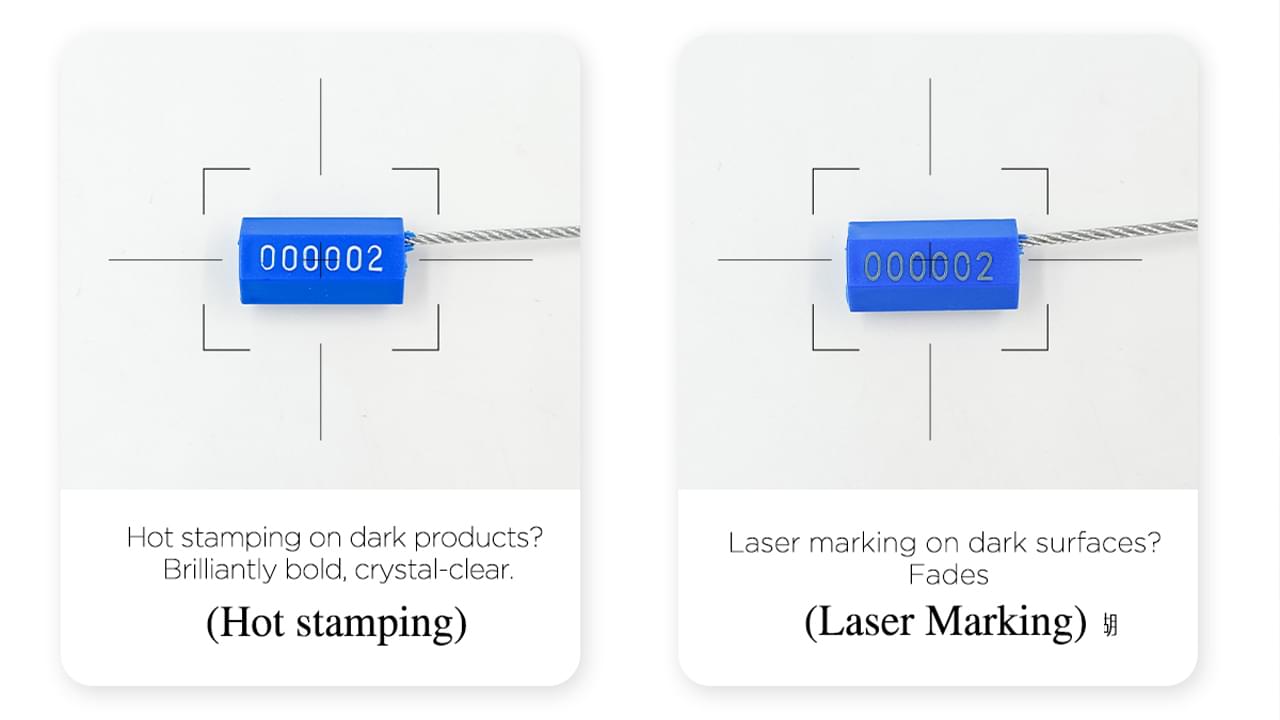
Hot Stamping delivers high-contrast, durable markings on dark plastics, security seals, and industrial components for clear identification and lasting readability.
In industrial manufacturing and global supply chains, product marking is far more than a surface-level detail. It plays a vital role in product identification, brand recognition, anti-counterfeiting, and traceability. When marking dark-colored products, achieving exceptional contrast, long-lasting legibility, and a professional finish is essential.
Two widely used marking technologies are laser marking and hot stamping. Laser marking offers speed, precision, and versatility across a range of materials and applications. However, when high contrast and consistent readability on dark or heavily pigmented surfaces are the primary requirements, hot stamping can offer a distinct advantage.
From security seals to industrial components, hot stamping delivers bold, clearly defined markings that combine functionality with a premium appearance. Here’s why it is an excellent choice for demanding product marking applications.
1. Overcoming the Challenges of High-Contrast Marking
Achieving clear, high-contrast markings on dark surfaces can be challenging. Depending on the material composition, pigment concentration, and laser parameters, laser marking on certain dark plastics may produce insufficient contrast or markings that are difficult to distinguish from the background.
This can compromise the readability of essential information, particularly when products are inspected under challenging lighting conditions or exposed to demanding operating environments.
Hot stamping offers an effective alternative. By applying heat and pressure, the process transfers a specially formulated, pigmented foil onto the product surface, creating a distinct visual contrast between the marking and the underlying material.
Unlike laser marking, which relies on a material’s response to laser energy, hot stamping introduces a contrasting foil layer. This makes it particularly suitable for applications where bold, uniform, and easily identifiable markings are essential.
The result is a clean, professional finish that helps product information stand out—even on dark-colored surfaces.
2. Reliable Marking for Security Seals and Cable Seals
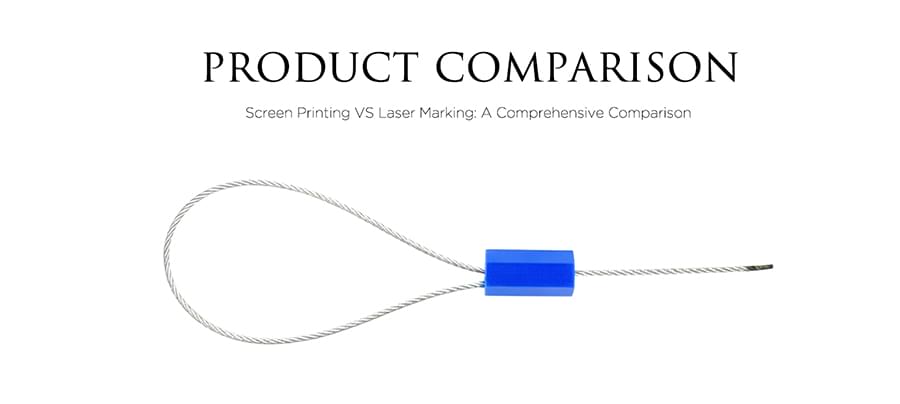
In logistics, transportation, and cargo security, clear product identification is critical. Cable seals and other security seals protect containers, shipments, and equipment, while their serial numbers, barcodes, and company logos support identification, verification, and traceability.
Every character must be easy to read. Poor contrast or unclear markings can slow down inspections, increase the risk of identification errors, and complicate the verification process.
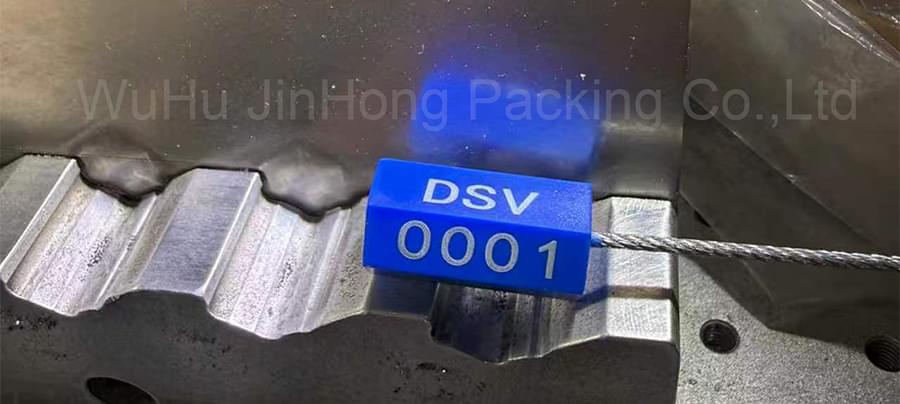
Hot stamping helps address these challenges by producing sharply defined characters with strong visual contrast. For example, white markings on a dark blue security seal can remain highly visible and easy to identify when the appropriate foil and stamping parameters are selected.
Whether applying serial numbers, company logos, or machine-readable codes, hot stamping provides a reliable solution for applications that demand consistent marking quality.
For security seals used throughout global supply chains, clear and durable marking is more than an aesthetic advantage—it is an important part of efficient identification and traceability.
3. High-Contrast Barcode Marking for Smarter Supply Chains
Barcode marking is a cornerstone of modern supply chain management. From warehouse inventory systems to automated logistics operations, readable barcodes enable fast scanning, accurate data capture, and efficient product tracking.
When a barcode lacks sufficient contrast or has poorly defined edges, scanning failures can occur. These failures may lead to repeated scanning attempts, manual data entry, processing delays, and additional operating costs.
Hot stamping can help improve barcode readability by creating a high-contrast marking with clearly defined edges, particularly when applying light-colored foil to dark substrates.
When the appropriate foil, barcode design, and stamping conditions are used, the resulting markings can support reliable scanning by compatible barcode readers and optical systems.
For manufacturers and logistics providers, this means greater confidence in product identification and smoother integration into automated tracking workflows.
The key advantage is simple: better marking contrast can help reduce scanning errors and improve operational efficiency.
4. A Premium Finish That Enhances Industrial Design
Product marking serves a functional purpose, but it also influences how customers perceive product quality.
In industrial design, details such as logo clarity, character definition, and finish consistency contribute to a product’s overall appearance. A well-executed marking can reinforce a brand’s professional image and create a stronger visual identity.
Hot stamping combines practical identification with aesthetic flexibility. Depending on the foil and substrate, it can produce crisp lettering, distinctive logos, and contrasting decorative elements on dark-colored components.
Available foil finishes can also help manufacturers achieve a specific visual effect, from understated solid colors to metallic accents, depending on application requirements.
For industrial components, security seals, and branded products, hot stamping offers an effective way to balance readability, visual appeal, and brand consistency.
5. Hot Stamping vs. Laser Marking: Choosing the Right Technology
Both hot stamping and laser marking have important roles in modern manufacturing. The best choice depends on the substrate, marking requirements, production volume, operating environment, and total cost of ownership.
| Key consideration | Hot stamping | Laser marking |
|---|---|---|
| Contrast on dark surfaces | Excellent when matched with suitable foil and substrate | Depends on material composition and laser response |
| Visual appearance | Bold, uniform, and available in various foil finishes | Typically produces a material-dependent mark without added foil |
| Marking detail | Well suited to clearly defined characters, logos, and suitable codes | Well suited to fine details and complex graphics |
| Process requirements | Requires heat, pressure, suitable foil, and compatible tooling | Requires an appropriate laser system and material-specific settings |
| Production economics | Attractive for repetitive, high-volume marking | Attractive for flexible marking and variable data without physical stamping dies |
For applications involving dark plastic products, security seals, and high-contrast identification, hot stamping is often a strong choice. For applications requiring frequent data changes, intricate graphics, or flexible non-contact processing, laser marking may be more suitable.
Rather than treating one technology as universally superior, manufacturers should evaluate the specific marking requirements and validate performance under real production conditions.
6. The Ideal Solution for Clear, Consistent Product Marking
When high visibility, consistent appearance, and a professional finish are essential, hot stamping offers compelling advantages for marking dark products.
From serial numbers on security seals to barcodes used in automated supply chains, it helps create distinctive markings that are easy to identify and designed to meet application-specific requirements.
The right combination of foil, substrate, tooling, and process parameters is essential to achieving the desired results. Adhesion, abrasion resistance, environmental exposure, and barcode readability should all be validated for the intended application.
Looking for a better way to mark dark-colored products?
Contact our team to explore how our hot stamping solutions can help you achieve high-contrast markings, consistent production quality, and a professional finish tailored to your application.